Today, the United States commemorates Martin Luther King, Jr., with a national holiday. We also install the next president on this very frigid day in the nation’s capital.
The irony of this day is not lost on me. We have two leaders with remarkably different attitudes and approaches. Although he was never an elected official, King used politics
and public opinion in advocating social change and the liberation of African Americans from centuries of brutally oppressive treatment. He was often criticized, threatened, even violently attacked, but King stayed true to the cause of civil rights and reform.
In contrast, the nation’s 45th / 47th president has a knack for using politics to enrich himself. Admittedly, he also has been criticized,
threatened, even violently attacked. But he has turned even his criminal prosecutions and the assassination attempt into profitable enterprises (e.g., offering pieces of his “mugshot suit” for sale and hawking limited-edition sneakers featuring his image from the assassination attempt).
More troubling to me are their stark contrasts on environmental issues. Martin Luther King, Jr., famously stated, “all life is
interrelated. We are all caught in an inescapable network of mutuality, tied into a single garment of destiny. Whatever affects one directly, affects all indirectly.” Though he was not specifically addressing environmental issues, Stephanie Gagnon has noted how this quotation from King’s 1967 Christmas Sermon resonates with
the views of environmental advocates like Rachel Carson and John Muir.
King also has been credited with planting the seeds for the environmental justice movement. He traveled to Memphis in the early spring of 1968 supporting what Gagnon and others have described as the beginnings of environmental justice. King lost his life defending the rights of sanitation workers for safe working conditions. Among their grievances
was frequent exposure to hazardous chemicals and other substances. King’s commitment to justice included the right to a clean, healthy environment in the workplace, at home, and throughout the community.
In contrast, the new president has declared he intends to support expansion of oil and gas production while rolling back or eliminating regulations that safeguard communities and the environment. “Drill, baby drill”
is the oft-repeated slogan of the new administration, regardless of the consequences.
Yet, I do not despair. I trust that the policies of the new administration will be short-lived as the public begins to feel the consequences. And I keep hope that justice will prevail, agreeing with Martin Luther King, Jr., “that we can transform dark yesterdays of injustice into bright tomorrows of justice and humanity.”
Undisguised and Naked: The poet in nature: I have lounged long hours on a sandy bank between a
sparkling river of clear water and a thick tangle of forest. I have perched alone in the grass above a lakeshore's muddy slope, listening to a breeze whistling through pine trees. I have closed my eyes to soak up the sounds of the evening darkening the wooded hollow where I had pitched my tent.
Passages: Reflections on 2024: All years are passages between what was and
what is yet to come. Usually, the transitions are subtle and incremental, hardly noticeable. But certain events signal a major crossing into something new. 2024 was one of those times, a bridge between distinct phases of my life. This essay reflects on the year with selected photos that I made in 2024 (and one from an earlier year).
Featured Photo
Bridal Veil Falls, Cuyahoga Valley National Park (Photo by T.S. Bremer)
Melanie and I moved to Ohio in 1981, and we stayed there for fifteen years. We have visited the state every year since, more than once most
years. Yet in all that time, we never visited Ohio's only national park,Cuyahoga Valley. Last month, that changed when we spent three days exploring the park. Wedged between Cleveland and Akron, it’s a surprisingly tranquil oasis in an otherwise heavily
industrialized region. At least, it was quiet and uncrowded in December—I imagine it’s a different story in warmer months. There are miles of hiking trails; a former canal towpath that stretches the length of the park for biking, jogging, and walking; canoeing and kayaking on the river and lakes; marshlands thriving with beavers, birds, and other wildlife; a scenic railroad operating in the summer; and much history, from prehistoric times to the canals of the Old Northwest and including recent
decades of rehabilitation and rewilding. Unlike most national parks, Cuyahoga Valley is surrounded by urban and suburban development, and it even has interstate highways running through it. But the park preserves natural spaces to transport visitors far from the pressures of modern city life.
News, Commentary, and other items of interest
5 Positive Environmental News Stories: "By highlighting solutions and success stories, positive environmental news provides a counterbalance to negative narratives and serves as a reminder that real progress
is possible." Positive environmental news | Stories to give you hope - Imagine 5
And another positive story: Youth affirm their right to a healthful environment: "Montana’s Supreme Court has ruled that the 16 youth who sued the state in a landmark climate change lawsuit
have a constitutional right to 'a clean and healthful environment.'” ‘We have been heard’: Montana youth score a major climate victory in court | Grist
Indigenous metal bands confronting colonialism: "Little has changed in 50 years,
and in some cases things have grown worse. Ultimately, that may be what unites Indigenous metal bands and fans the world over. Despite coming from many tribes, communities, and countries, the destructive force of colonialism, and the degradation of the environment, is something we all share." Loud, angry, Indigenous: Heavy metal takes on colonialism -
ICT News
Plant-based photography: Spanish-British photographer Almudena Romero's "innovative approach to photography, using organic materials such as leaves and natural light, transforms traditional image-making into a reflection on impermanence and the fragility of our environment." Photo-synthesis: The photographer going plant-based in her pictures - Imagine 5
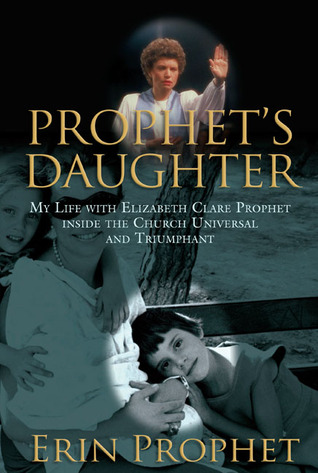
This memoir by the daughter of charismatic founders of an unconventional religious movement takes readers into the inner workings of the Church Universal and Triumphant (C.U.T.), a community widely labeled as a “cult.” After being groomed to succeed her mother as the autocratic leader of this controversial church, Erin Prophet left the community. But this book is not a tell-all
condemnation of C.U.T. (though there are plenty of shocking revelations). In an honest, confessional tone, Erin Prophet reflects on her upbringing, her role in C.U.T.’s most controversial episodes, and her break with her mother.
The church community borders Yellowstone National Park, and the park figures prominently in their sacred geography. I discuss
their history in the final chapter of my forthcoming book on Yellowstone, and I used this book as a key primary source. But it’s also a gripping personal tale.
Winter Again
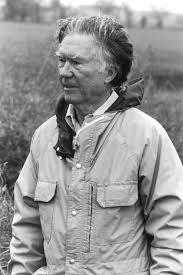
I have long admired how William Stafford’s poems about the natural world illuminate larger consequential concerns from more immediate and often mundane details. The title poem of his book Traveling Through the Dark (which won the 1963 National Book Award for Poetry), may be
his best-known work. It tells of the poet encountering a doe recently killed on a mountain road. He stops to push the carcass off the road and into the river, but hesitates momentarily when he realizes that she was pregnant and the unborn fawn was still alive. It’s a breathtaking and heartbreaking poem told in simple and straightforward language. Though less dramatic, the poem featured here is equally profound in its allusions to past traumas.
Whispered in Winter
Snow falls. The fields begin again
their forgiveness. All that dirt forgiven.
All along the street forgiven—the magenta
house, proud maples, the corner where
Ellen lived, a glimpse of old Barney.
Some people don’t have any past.
On school mornings forgive the fog, all that
avoidance when Ruth wanted to talk,
the teacher who ridiculed mistakes,
the boy who called out “Bitch! Hellraker!”
through his fence as you walked by.
You can learn from anything.
But for some there isn’t enough snow,
ever—the nails fused in a cross
they saved when the church burned,
the cemetery more silent every day.
We need a softer snow, again, again.
Again. – William Stafford
[Source: The Way It Is: New and Selected Poems (1998)]
I would love to hear from you.
You can reach me by replying to this email or clicking on the Contact button.